Artificial intelligence is no longer a niche feature inside apps. In 2026, AI defines how smartphones, laptops, and online services work. Companies like Apple, Google, Microsoft, and OpenAI compete to build the smartest AI ecosystem.
Apple entered this race with Apple Intelligence, its system-wide AI platform designed for iPhone, iPad, and Mac. The company focuses heavily on privacy, on-device processing, and deep integration with hardware.
Meanwhile, competitors such as Google Gemini, Microsoft Copilot, and OpenAI’s GPT models push the limits of reasoning, automation, and cloud intelligence.
So which AI ecosystem actually performs best in 2026?
This guide compares Apple Intelligence with its competitors using verified information, real capabilities, and trusted sources. If you want to understand the future of AI-powered devices, this comparison will give you a clear answer.
What Is Apple Intelligence?
Apple Intelligence is Apple’s personal AI system integrated into iOS, iPadOS, and macOS. Apple announced the platform at WWDC and designed it to help users write, organize information, and automate everyday tasks. (Apple)
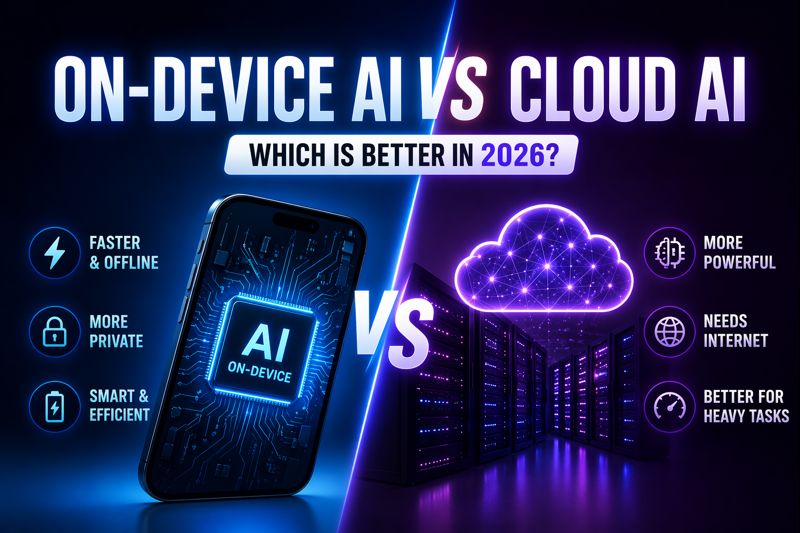
Unlike many AI platforms that rely mostly on cloud servers, Apple Intelligence runs many AI models directly on the device.
This hybrid design includes two layers:
- On-device AI models
- Private Cloud Compute servers
Apple created Private Cloud Compute to process complex requests while still protecting user privacy. Apple states that these servers run on Apple silicon and do not retain user data after processing. (Apple)
Core Apple Intelligence Features
Apple Intelligence introduces several AI tools across Apple devices:
- AI writing tools for rewriting and summarizing text
- Image creation tools like Image Playground
- Custom emoji generation called Genmoji
- AI photo cleanup and advanced search
- Context-aware Siri assistant
- Automatic email and message summarization
Many of these features integrate directly into apps such as Mail, Messages, Notes, and Photos. (India Today)
This deep system integration is Apple’s biggest advantage.
Why the AI Race Became Fierce in 2026 ?
AI has become the next major computing platform. Technology companies now compete to control how people interact with devices and information.
Three areas define the competition:
- AI assistants
- Productivity automation
- Device-level intelligence
The main AI ecosystems in 2026 include:
| Company | AI Platform | Core Strength |
|---|---|---|
| Apple | Apple Intelligence | Privacy + device integration |
| Gemini | Advanced reasoning and search | |
| Microsoft | Copilot | Workplace productivity |
| OpenAI | GPT models | Conversational intelligence |
Each ecosystem solves different problems.
That is why comparing them requires looking at real-world use cases.
Apple Intelligence Strengths
1. Privacy-Focused AI Architecture
Apple designed its AI system around privacy.
Many AI operations run locally on iPhone, iPad, or Mac hardware. This means personal data often never leaves the device.
When requests require larger models, Apple sends them to Private Cloud Compute, where Apple claims data is processed securely and not stored. (Apple)
This approach differs from competitors that rely heavily on cloud AI.
For users concerned about privacy, this is a major advantage.
2. Deep Integration With Apple Devices
Apple controls both hardware and software. That gives it a unique advantage.
Apple Intelligence integrates with:
- iPhone
- iPad
- Mac
- Apple Vision Pro
Because of this integration, AI features work inside everyday apps instead of separate chatbots.
Examples include:
- Summarizing notifications automatically
- Finding specific photos with natural language
- Creating polls in Messages
- Tracking orders in Apple Wallet from email receipts (Apple)
This seamless experience makes AI feel like a natural part of the operating system.
3. Smarter Siri Assistant
Apple redesigned Siri with new language understanding abilities.
The new system can:
- Understand context between requests
- Perform actions across apps
- Respond through voice or text
- Access information from messages, emails, and notes (Apple)
For example, users can ask Siri to send photos from a recent event or locate recommendations from a conversation.
However, Apple has delayed some advanced Siri features to ensure reliability. (The Verge)
Apple Intelligence Limitations
Even though Apple Intelligence is powerful, it still faces challenges.
Device Restrictions
Apple Intelligence only runs on newer hardware.
Supported devices include:
- iPhone 15 Pro and newer
- Apple silicon Macs
- M-series iPads
Older devices cannot run the full system.
AI Reasoning Still Improving
Compared with large cloud models, Apple’s on-device models can be less powerful in complex reasoning tasks.
To address this, Apple allows Siri to connect with ChatGPT when needed. (Apple)
This hybrid model combines Apple’s privacy-first design with stronger external AI models.
Google Gemini: Apple’s Biggest AI Rival
Google’s Gemini AI models power many services including Google Search, Gmail, and Android.
Google’s main advantage is its massive cloud infrastructure and AI research teams.
Why Gemini Is Powerful
- Advanced reasoning models
Gemini models handle complex prompts, coding tasks, and long conversations effectively.
- Integration with Google ecosystem
Gemini connects with:
- Gmail
- Google Docs
- Google Drive
- Google Search
- Google Maps
This integration allows Gemini to access real-time information.
- Massive Android reach
Android runs on billions of devices worldwide. This gives Google a much larger deployment scale than Apple.
Weaknesses of Gemini
Despite its strengths, Gemini has limitations:
- Heavy dependence on cloud servers
- Ongoing privacy concerns among users
- Less seamless hardware integration compared with Apple devices
Microsoft Copilot: The Productivity Leader
Microsoft focuses its AI strategy on productivity.
Copilot integrates directly into:
- Microsoft Word
- Excel
- PowerPoint
- Outlook
- Teams
- Windows
These tools help automate tasks such as:
- Writing documents
- Creating presentations
- Summarizing meetings
- Analyzing spreadsheets
This makes Copilot extremely valuable for professionals and businesses.
Many organizations now rely on Copilot to improve workflow efficiency.
OpenAI GPT Models: The Intelligence Benchmark
OpenAI’s GPT models remain some of the most capable conversational AI systems.
They excel at:
- Writing
- Coding
- Problem solving
- Research assistance
Many AI products across the industry rely on GPT models behind the scenes.
Their biggest advantage is natural conversation and deep reasoning ability.
However, GPT systems mostly run in the cloud, which creates privacy concerns for some users.
Apple Intelligence vs Competitors: Feature Comparison
Here is a simple comparison of the major AI platforms in 2026.
| Feature | Apple Intelligence | Google Gemini | Microsoft Copilot | OpenAI GPT |
|---|---|---|---|---|
| Privacy | Excellent | Moderate | Moderate | Moderate |
| Device Integration | Excellent | Good | Limited | Limited |
| Reasoning Ability | Good | Excellent | Good | Excellent |
| Productivity Tools | Good | Good | Excellent | Good |
| Conversational AI | Moderate | Good | Good | Excellent |
The table shows an important fact.
No AI ecosystem dominates every category.
Each platform focuses on a different strength.
Best AI Platform for Different Users
Best AI for Apple Users
If you use iPhone, iPad, and Mac daily, Apple Intelligence delivers the most seamless experience.
AI features appear directly inside the apps you already use.
Winner: Apple Intelligence
Best AI for Research and Information
For complex questions and real-time knowledge, Google Gemini often performs better.
Winner: Google Gemini
Best AI for Work and Business
Professionals working with documents and spreadsheets benefit most from Microsoft Copilot.
Winner: Microsoft Copilot
Best AI for Creative Tasks
For writing, coding, and brainstorming, GPT-based systems remain industry leaders.
Winner: OpenAI GPT
The Future of Apple Intelligence
Apple continues investing heavily in AI.
Recent reports suggest Apple is developing a major Siri overhaul that will behave more like a chatbot assistant integrated deeply into Apple operating systems. (Reuters)
Apple is also expanding its Private Cloud Compute infrastructure with new AI servers powered by custom Apple silicon. (Tom’s Hardware)
These improvements aim to strengthen Apple’s AI ecosystem while maintaining its privacy-first philosophy.
Final Verdict: Which AI Ecosystem Is Best in 2026?
There is no single winner in the AI race.
Each platform dominates a different area.
Choose Apple Intelligence if you want:
- Strong privacy protection
- Deep integration with iPhone and Mac
- AI features built directly into your device
Choose Google Gemini if you want:
- Powerful reasoning
- Real-time web intelligence
- AI integrated with Google services
Choose Microsoft Copilot if you want:
- Workplace productivity automation
- Document and spreadsheet assistance
Choose OpenAI GPT tools if you want:
- The most advanced conversational AI
- Powerful writing and coding support
Quick Summary
Apple Intelligence focuses on privacy, on-device AI, and deep integration with Apple devices like iPhone, iPad, and Mac. It makes everyday tasks easier with features like smart writing tools, notification summaries, and improved Siri.
However, competitors still lead in some areas. Google Gemini excels in real-time search and reasoning, Microsoft Copilot dominates workplace productivity, and OpenAI GPT models remain the strongest in conversational AI and creative tasks.
In 2026, Apple Intelligence is the best choice for Apple ecosystem users, while other AI platforms may perform better for advanced queries, research, or professional workflows.
Conclusion
Apple Intelligence represents a different vision for artificial intelligence.
Instead of building the most powerful chatbot, Apple focuses on making everyday devices smarter while protecting user privacy.
Google and OpenAI still lead in raw AI reasoning power. Microsoft leads in enterprise productivity.
But Apple has something unique: complete control over hardware, software, and AI integration.
If Apple continues improving Siri and on-device models, the company could become a major AI leader in the coming years.
For now, the real winner in 2026 is simple.
Frequently Asked Questions (FAQ)
1. What is Apple Intelligence in simple terms?
Apple Intelligence is Apple’s built-in artificial intelligence system for iPhone, iPad, and Mac. It helps users write emails, summarize notifications, search photos, generate images, and automate tasks. Many features run directly on the device to protect user privacy.
Source: Apple Newsroom.
2. Which devices support Apple Intelligence in 2026?
Apple Intelligence currently works on newer devices that have Apple Silicon chips. Supported devices include:
- iPhone 15 Pro and newer
- M-series Mac computers
- iPads with M-series chips
Older devices usually cannot run the full AI system because the models require powerful neural engines.
3. Is Apple Intelligence better than Google Gemini?
The answer depends on how you use AI.
- Apple Intelligence focuses on privacy and device integration.
- Google Gemini focuses on advanced reasoning and web-based intelligence.
For iPhone users who want seamless AI features, Apple Intelligence works better. For complex queries and real-time information, Gemini may perform better.
4. Does Apple Intelligence send user data to the cloud?
Apple Intelligence processes many requests directly on the device. When a task requires larger AI models, Apple uses Private Cloud Compute, which Apple says does not store personal data after processing.
Source: Apple Privacy and AI documentation.
5. How is Apple Intelligence different from ChatGPT?
Both systems use artificial intelligence, but they serve different purposes.
- Apple Intelligence integrates into Apple apps like Mail, Messages, and Photos.
- ChatGPT works mainly as a conversational AI assistant.
Apple Intelligence also allows optional integration with ChatGPT for complex questions.
6. Is Apple Intelligence free to use?
Most Apple Intelligence features come built into supported Apple devices, meaning users do not need a separate subscription. However, some advanced AI services integrated from third parties may require external accounts.
7. Can Apple Intelligence replace Siri?
Apple Intelligence does not replace Siri. Instead, it enhances Siri with new AI capabilities.
The improved Siri can:
- Understand context between commands
- Access information across apps
- Perform complex actions on the device
Apple continues to improve Siri with future updates.
8. Which AI platform is the most powerful in 2026?
Different platforms lead in different areas:
- Apple Intelligence: Best for device integration and privacy
- Google Gemini: Best for real-time knowledge and reasoning
- Microsoft Copilot: Best for productivity tools
- OpenAI GPT: Best for conversational AI and creative tasks
No single AI ecosystem dominates every category.
9. Is Apple Intelligence safe for personal data?
Apple designed Apple Intelligence with a privacy-first architecture. Many tasks run locally on the device, which reduces the need to send personal data to external servers.
Security experts often highlight Apple’s approach as one of the most privacy-focused AI implementations in consumer technology.
10. Will Apple Intelligence improve in the future?
Yes. Apple is investing heavily in AI hardware and software. Future updates are expected to include:
- More powerful on-device AI models
- Expanded Siri capabilities
- Better integration with third-party apps
Industry analysts believe Apple’s hardware-focused strategy could make its AI ecosystem even stronger in the coming years.
READ MORE:
1.Gemini in Chrome Turns Your Browser Into an AI Assistant
2.AI Beats Humans in 83% of Real Jobs — GPT-5.4 Shock Report