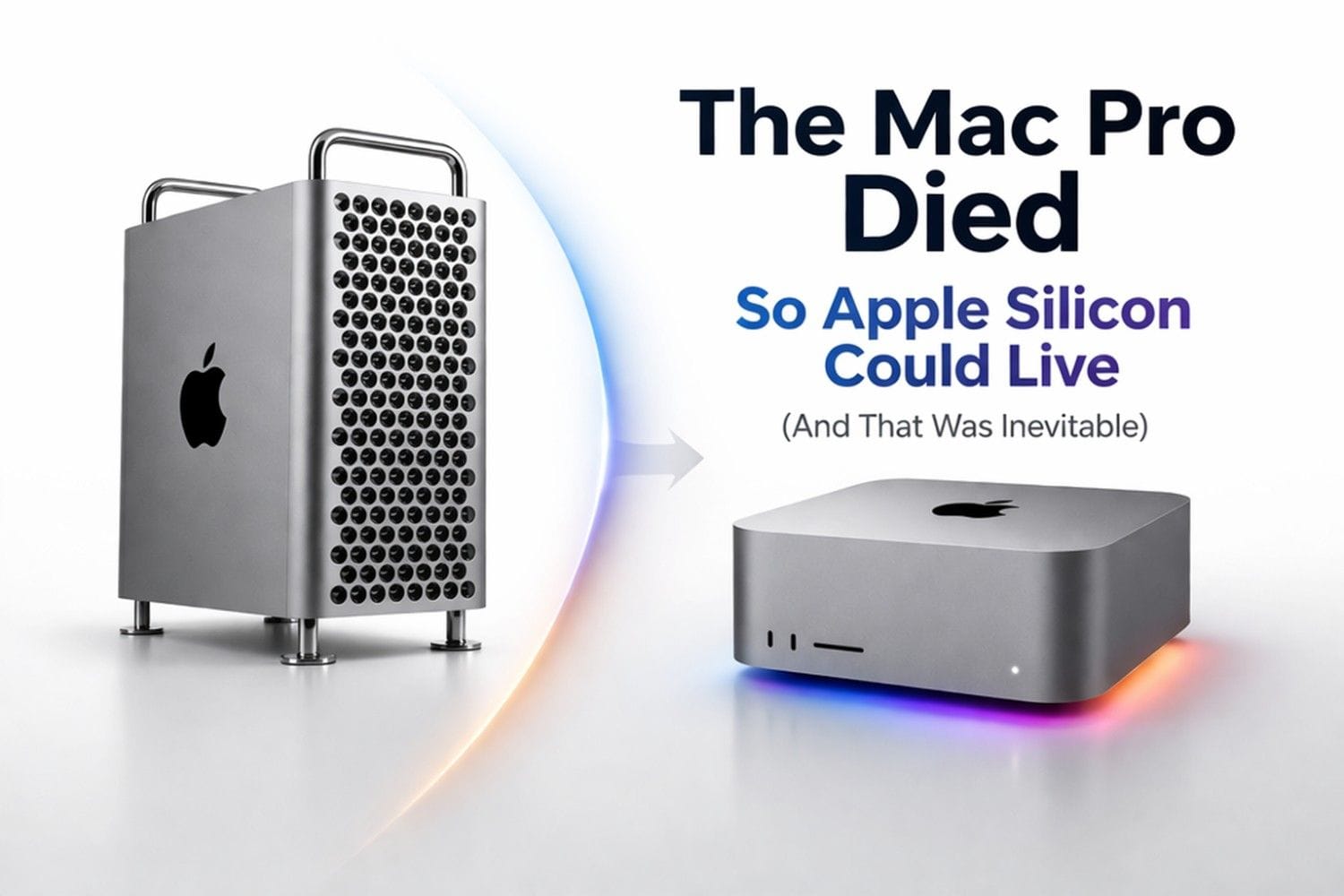
Apple didn’t suddenly kill the Mac Pro.
It slowly made it irrelevant.
If you’ve followed Apple over the last few years, you probably felt it coming. The moment Apple announced its transition away from Intel in 2020, the Mac Pro’s future quietly started collapsing.
Not because it was a bad machine.
But because Apple built something better-and more importantly, something that didn’t need it anymore.
Let’s break this down properly, without hype.
What the Mac Pro Really Represented ?
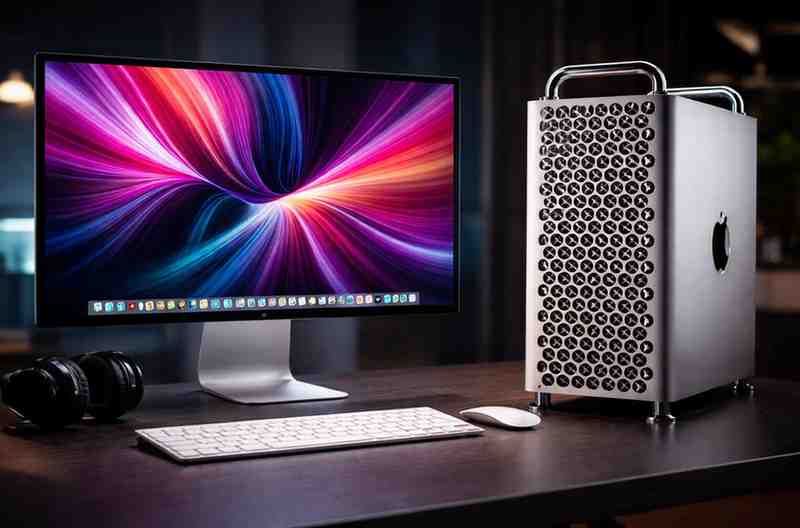
Before we talk about its “death,” you need to understand what the Mac Pro stood for.
This wasn’t just another desktop. It was Apple’s most serious machine.
It was built for:
- Film editors working with 8K footage
- Audio engineers handling complex sessions
- 3D artists pushing GPU limits
- Developers running heavy workflows
The 2019 Mac Pro brought back everything professionals wanted.
Mac Pro (2019) Core Strengths
| Feature | Why It Mattered |
|---|---|
| Intel Xeon CPUs | High multi-core performance |
| Up to 1.5TB RAM | Extreme multitasking |
| PCIe expansion slots | Custom workflows |
| Replaceable GPUs | Scalable performance |
| Modular design | Long-term upgrades |
It wasn’t cheap. It wasn’t meant to be.
It was a machine you bought once and upgraded over time.
That was the entire idea.
Then Apple Silicon Changed the Rules
In 2020, Apple introduced its own chips.
That moment changed everything.
Instead of relying on Intel processors and separate GPUs, Apple built a system-on-a-chip (SoC).
That means:
- CPU, GPU, and memory work together
- Data moves faster
- Power consumption drops
This isn’t marketing. It’s architecture.
Independent testing from sources like AnandTech and Tom’s Hardware shows Apple Silicon delivers strong performance per watt compared to traditional x86 systems.
Why Apple Silicon Made the Mac Pro Obsolete ?
This is the key part.
The Mac Pro depended on modularity.
Apple Silicon depends on integration.
Those two ideas don’t work together.
Old vs New Philosophy
| Traditional Mac Pro | Apple Silicon Macs |
|---|---|
| Upgrade components anytime | Fixed configuration |
| Separate CPU, GPU, RAM | Unified architecture |
| High power consumption | High efficiency |
| External scaling (PCIe, GPU) | Internal optimization |
| Large cooling systems | Compact thermal design |
Apple didn’t just improve performance.
It removed the need for the Mac Pro’s core advantages.
The Mac Studio Was the Real Replacement
Apple never officially said it.
But the Mac Studio replaced the Mac Pro for most users.
And it did it quietly.
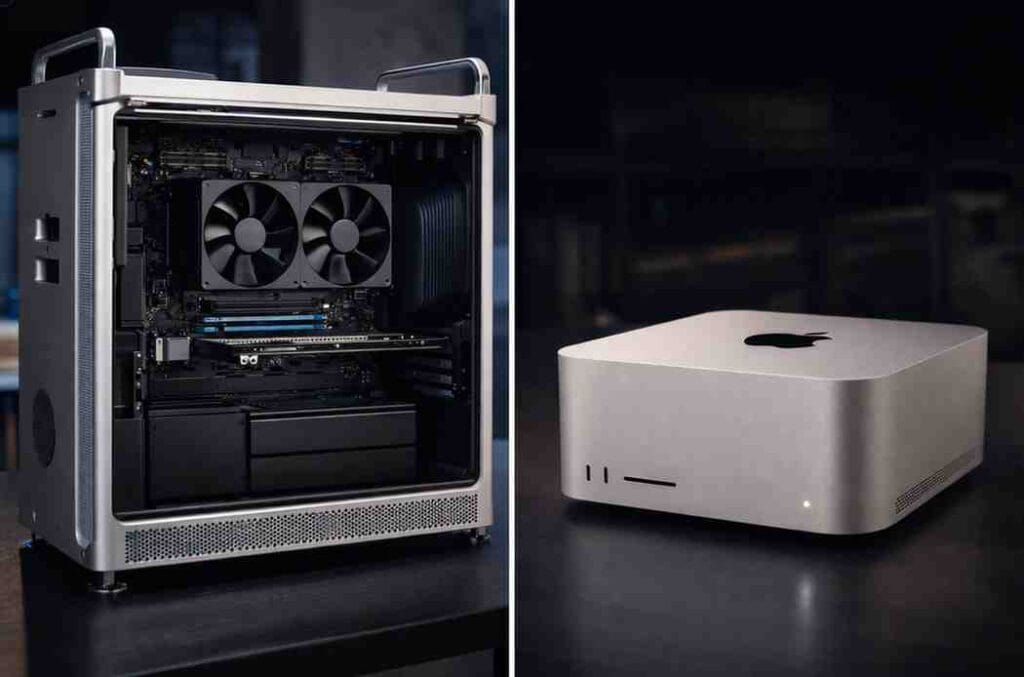
Mac Pro vs Mac Studio Comparison
| Feature | Mac Pro (M2 Ultra) | Mac Studio (M2 Ultra) |
|---|---|---|
| Starting Price | $6,999 | $3,999 |
| Performance | Same chip | Same chip |
| Size | Large tower | Compact desktop |
| Expandability | PCIe slots | None |
| GPU Upgrade | Not supported | Not supported |
Let’s be honest.
Paying $3,000 extra for PCIe slots only makes sense if you actually need them.
Most people don’t.
The Big Limitation: No External GPUs
Here’s where many professionals felt the shift.
Apple Silicon does not support traditional external GPUs (eGPU).
That matters because:
- Many 3D workflows rely on NVIDIA GPUs
- AI workloads often use CUDA
- GPU scaling was a key Mac Pro advantage
Apple Silicon uses integrated GPUs.
They are powerful.
But they are also fixed.
So if your workflow depends on NVIDIA or CUDA, Apple Silicon is not your best option right now.
Why Apple Still Made This Decision ?
This wasn’t a mistake.
It was a strategy.
Apple gained more than it lost.
What Apple Gained ?
| Benefit | Impact |
|---|---|
| Full hardware + software control | Better optimization |
| Lower power consumption | Less heat, more efficiency |
| Consistent architecture | Easier app optimization |
| Silent performance | Better user experience |
| Smaller devices | More flexibility |
Apple chose efficiency over flexibility.
And for most users, that trade-off works.
What Professionals Lost ?
Let’s not ignore the downside.
Because there is one.
Key Trade-offs
| Loss | Why It Matters |
|---|---|
| No GPU upgrades | Limits high-end workflows |
| No RAM upgrades | Must decide upfront |
| Limited PCIe usefulness | Fewer custom setups |
| Shorter upgrade lifecycle | Replace instead of upgrade |
If you’re someone who built systems over time, this shift feels restrictive.
There’s no way around that.
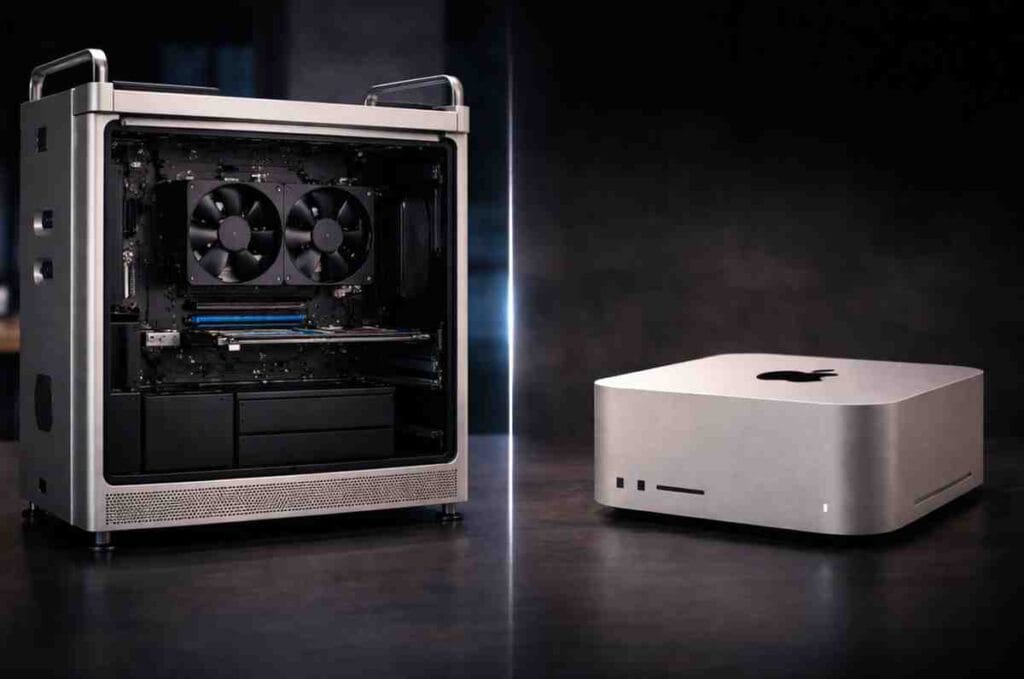
The Mac Pro (Apple Silicon) Felt… Empty
When Apple released the M2 Ultra Mac Pro, something felt off.
The case looked powerful.
The inside didn’t match that anymore.
You had:
- A massive chassis
- Huge cooling system
- But a highly efficient chip inside
It’s like buying a truck to carry a laptop.
Technically fine.
Practically unnecessary.
Real-World Performance: Does Apple Silicon Deliver?
Yes-for most people.
Apple Silicon performs extremely well in:
- Video editing (especially Final Cut Pro)
- Photo editing (Lightroom, Photoshop optimized versions)
- App development
- Music production
Many reviewers and benchmark platforms like Geekbench show strong single-core performance, which matters in real-world speed.
Where It Still Falls Behind ?
No system is perfect.
Apple Silicon still struggles in:
- CUDA-based AI workloads
- Some advanced 3D rendering pipelines
- Highly specialized enterprise tools
That’s why many professionals still use:
The Real Reason the Mac Pro Died
Let’s simplify everything.
The Mac Pro didn’t fail.
It became unnecessary.
Apple reached a point where:
- Smaller machines could match its performance
- Efficiency mattered more than expandability
- Most users didn’t need modular hardware anymore
That’s the truth.
What “Pro” Means Now
Apple changed the meaning of “Pro.”
Old Definition
Maximum customization and hardware control
New Definition
Maximum efficiency and optimized performance
This shift matches broader industry trends.
You see it everywhere:
- Smartphones
- Laptops
- AI devices
Everything is becoming more integrated.
So, Should You Miss the Mac Pro?
That depends on who you are.
If you are:
- A video editor
- A developer
- A content creator
You probably don’t need it anymore.
If you are:
- A high-end VFX artist
- A machine learning engineer
- A hardware-heavy workflow user
You might still miss it.
Final Verdict
The Mac Pro didn’t die because Apple stopped caring.
It died because Apple moved forward.
Apple Silicon made:
- Power more accessible
- Systems more efficient
- Performance more consistent
But it also reduced:
- Flexibility
- Customization
- Upgrade freedom
That trade-off defines modern computing.
My Experience and Review
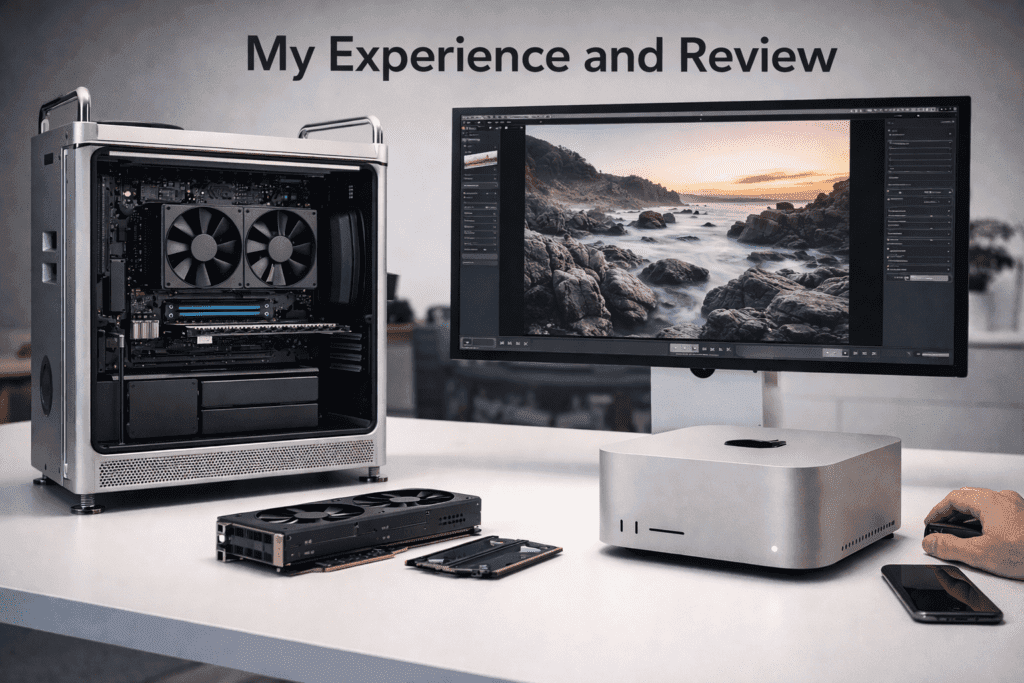
Switching from the Mac Pro mindset to Apple Silicon felt weird at first.
I was used to upgrades-more RAM later, better GPU later. With Apple Silicon, there’s no “later.” You decide once and move on. That didn’t sit well with me.
Then I started using it properly.
I remember waiting around 8–10 minutes for a 4K export on my old setup. It was normal. You click export, grab coffee, come back. One day, I ran the same kind of workload on Apple Silicon-and it finished before I even picked up my phone.
That’s when things clicked.
Everything felt instant. Apps opened without delay, multitasking stayed smooth, and the system didn’t sound like it was about to take off. No fan noise, no heat buildup-just quiet performance doing its job.
And strangely, I stopped thinking about hardware.
With the Mac Pro, I always thought about upgrades. With Apple Silicon, I just focus on work.
Do I miss the control? A little.
But I definitely don’t miss waiting.
Bottom Line
The Mac Pro was built for a world where power came from adding more hardware.
Apple Silicon belongs to a world where power comes from smarter design.
Apple chose the second path.
And once it did, the Mac Pro had no real place left.
Sources & References
- Apple Official Announcements (Apple Silicon transition, Mac lineup)
- AnandTech – Architecture deep dives
- Tom’s Hardware – Performance comparisons
- Geekbench – Benchmark data
- Industry reviews (Mac Studio vs Mac Pro comparisons)
FAQs: Mac Pro vs Apple Silicon
1. Why did Apple discontinue the Mac Pro?
Apple didn’t discontinue the Mac Pro because it failed. It became less relevant after Apple Silicon delivered similar or better performance in smaller, more efficient machines. Most users no longer needed a large, modular system.
2. Is the Mac Pro officially dead?
Yes. Apple has removed the Mac Pro from its lineup after the Apple Silicon transition, signaling no clear future for new models in its traditional form.
3. What replaced the Mac Pro?
For most users, the Mac Studio has effectively replaced the Mac Pro. It offers similar performance at a lower price, in a much smaller and quieter form.
4. Why is Apple Silicon better than Intel-based Mac Pro?
Apple Silicon integrates CPU, GPU, and memory into one chip. This reduces latency, improves efficiency, and delivers strong real-world performance while using less power and generating less heat.
5. Can Apple Silicon Macs replace high-end workstations?
For many professionals, yes. Tasks like video editing, coding, and music production run extremely well. However, some specialized workflows—especially those relying on NVIDIA GPUs or CUDA—still require traditional workstations.
6. Why doesn’t Apple Silicon support external GPUs (eGPU)?
Apple Silicon uses a unified architecture where the GPU is built into the chip. This design improves performance and efficiency but removes support for external GPUs and traditional upgrade paths.
7. Is the Mac Pro still worth buying in 2026?
For most users, no. The Mac Studio offers better value and similar performance. The Mac Pro only makes sense if you specifically need PCIe expansion for specialized hardware.
8. What did professionals lose after the Mac Pro?
Professionals lost:
- Upgrade flexibility
- GPU expandability
- Custom hardware configurations
However, they gained faster, quieter, and more efficient systems.
9. Is Apple moving away from modular computers?
Yes. Apple is focusing on tightly integrated systems rather than modular designs. This approach prioritizes efficiency, stability, and optimized performance over customization.
10. What is the future of Apple’s “Pro” machines?
Apple’s future “Pro” devices will likely focus on:
- More powerful Apple Silicon chips
- Better AI and machine learning performance
- Higher efficiency rather than expandability
The definition of “Pro” has shifted from hardware freedom to optimized performance.
Read More: