Ride-share drivers rely on their smartphones more than most professionals. Every ride request, navigation route, passenger message, and payment notification runs through a single device. If the phone slows down, overheats, or loses battery, the driver loses time—and sometimes money.
That is why many drivers actively search for the best smartphone for ride-share drivers in 2026. A good device must handle GPS navigation, ride-sharing apps, constant connectivity, and long working hours without struggling.
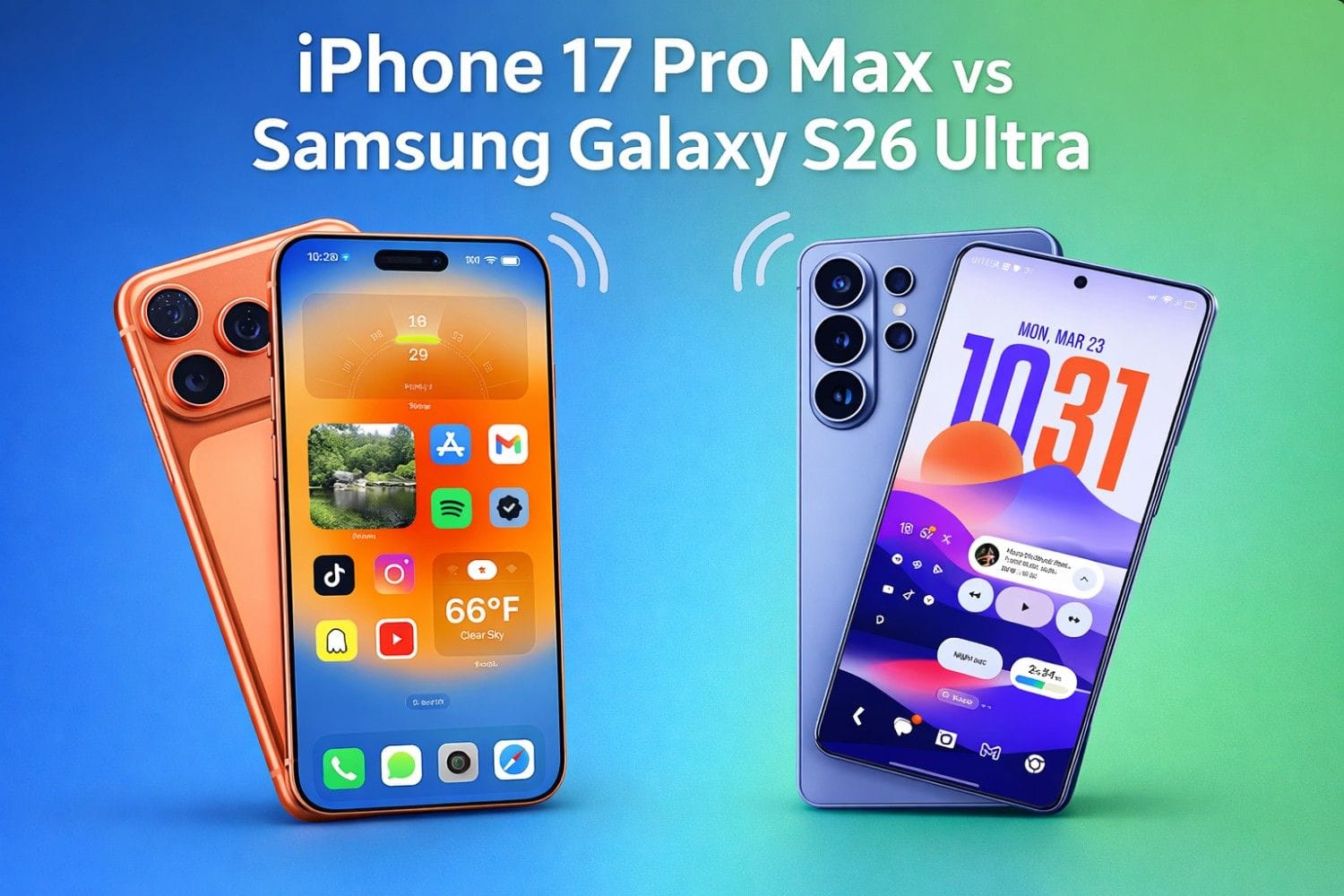
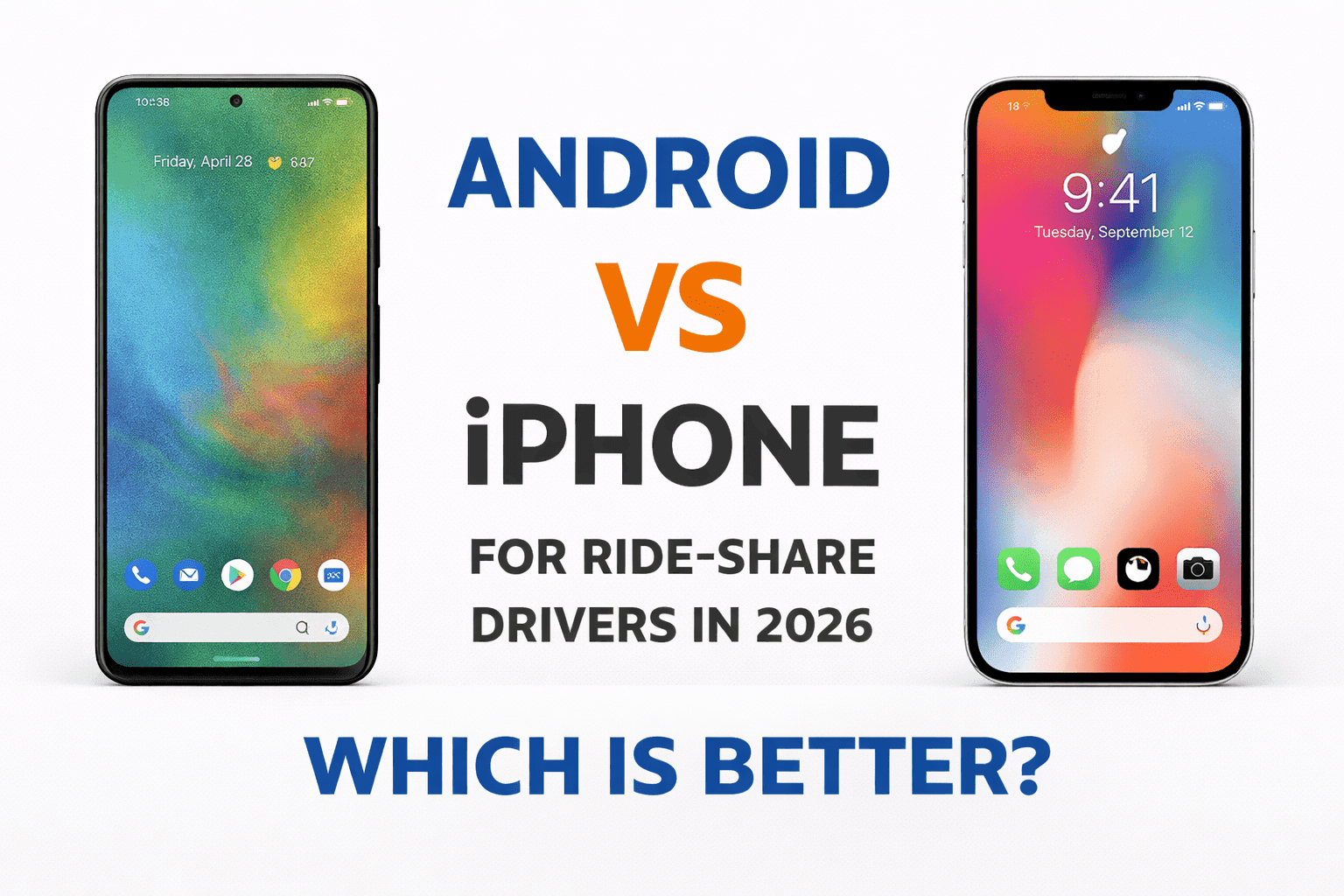
The biggest question drivers often ask is simple: Android vs iPhone for ride-share drivers in 2026 — which one actually performs better?
Both platforms dominate the smartphone market, yet they offer very different experiences for drivers working with apps like Uber, Lyft, Bolt, and delivery platforms.
In this guide, we will compare Android and iPhone from a driver’s perspective. We will focus on navigation reliability, battery life, pricing, app performance, and overall usability to help drivers choose the right device.
Why Your Smartphone Matters for Ride-Share Driving
A ride-share driver uses a smartphone for far more than calls and messages. The device becomes the main work tool throughout the day.
Drivers depend on their phones for:
- Ride-sharing apps such as Uber and Lyft
- GPS navigation and real-time traffic updates
- Communication with passengers
- Earnings tracking and trip management
- Music or podcasts during long drives
Because of these demands, the best phone for Uber drivers or taxi drivers must handle several tasks at once without slowing down.
Navigation apps alone require constant GPS signals, mobile data, and screen usage. According to Google Maps documentation, continuous navigation places significant demand on battery and processor resources because the app constantly processes location data and traffic updates.
This makes hardware performance and battery efficiency extremely important for drivers.
Android vs iPhone: Key Differences for Drivers
Before diving into detailed comparisons, it helps to understand the core difference between Android and iPhone devices.
Android phones run on the Android operating system developed by Google, which manufacturers such as Samsung, Google Pixel, OnePlus, and Xiaomi use in their devices.
iPhones run on Apple’s iOS operating system, which Apple designs specifically for its own hardware.
According to StatCounter global mobile statistics, Android holds the largest global smartphone market share, while Apple dominates in markets such as the United States.
For drivers, this difference affects pricing, device variety, customization options, and battery choices.
GPS Navigation Accuracy: Android vs iPhone
Navigation remains the most critical feature for any ride-share driver.
Drivers spend hours using apps like Google Maps, Waze, or Apple Maps for directions and traffic alerts.
Android Navigation Strengths
Android devices often integrate tightly with Google services. Since Google Maps originates from Google, Android phones usually deliver very smooth performance with the app.
Many Android devices also support:
- Dual-frequency GPS
- Multi-satellite positioning (GPS, GLONASS, Galileo, BeiDou)
- Advanced location optimization
High-end devices such as Samsung Galaxy flagship phones often provide extremely accurate location tracking during navigation.
iPhone Navigation Strengths
Apple continues to improve Apple Maps and iOS navigation features. According to Apple’s developer documentation, iPhones use advanced sensor fusion—combining GPS, accelerometer, gyroscope, and Wi-Fi positioning—to improve location accuracy.
iPhones also handle navigation smoothly due to Apple’s tight hardware-software integration.
Which Is Better for Navigation?
Both platforms deliver excellent navigation today. However, many drivers prefer Android because Google Maps integration feels slightly more natural on Android devices.
For drivers who rely heavily on Google services, Android usually offers a smoother experience.
Battery Life for Long Driving Hours
Battery life often determines whether a phone works well for ride-share driving.
Drivers frequently keep navigation running for several hours while using ride-share apps simultaneously.
According to Apple’s official specifications, recent iPhones provide all-day battery life under typical usage conditions. However, heavy navigation usage drains battery faster.
Many Android phones focus heavily on battery capacity. Some devices include batteries larger than 5000 mAh, which helps support long navigation sessions.
Why Battery Matters for Drivers
Ride-share drivers commonly experience:
- Continuous screen usage
- GPS tracking all day
- Mobile data usage
- Background app activity
These tasks drain power quickly.
Many drivers solve this issue by using car chargers or wireless mounts, but a phone with strong battery capacity still performs better during long shifts.
Battery Winner
Android often wins in this category because manufacturers can build phones with larger batteries.
However, iPhones remain efficient due to Apple’s optimized hardware.
App Performance for Ride-Share Platforms
Ride-share drivers depend on reliable app performance.
Apps such as Uber Driver, Lyft Driver, and delivery platforms require fast response times and stable connections.
iPhone Performance Advantage
Apple designs both the hardware and software for iPhones. This approach helps developers optimize apps easily.
Many developers test apps on iPhones first because the number of device models remains limited.
This leads to smoother app performance in many cases.
Android Performance Advantage
Modern Android flagship phones now match iPhones in performance.
Devices powered by advanced processors from Qualcomm or Google Tensor chips run ride-share apps smoothly.
However, lower-cost Android phones may struggle with heavy multitasking.
App Performance Verdict
If you buy a flagship Android phone, performance will match iPhone easily.
But if you use a cheaper device, iPhones often deliver more consistent performance.
Pricing: Android Has a Big Advantage
Price plays a major role for ride-share drivers.
Not every driver wants to spend over $1000 on a phone used mainly for work.
Android phones offer devices across many price ranges.
Drivers can find reliable Android phones between $300 and $600, which still run navigation and ride-share apps smoothly.
iPhones usually sit in the premium price category.
Even entry models often cost significantly more than many Android alternatives.
Best Choice for Budget Drivers
Android clearly wins for affordability.
Drivers can choose devices that match their budget without sacrificing performance.
Device Variety and Flexibility
Android offers an enormous range of devices.
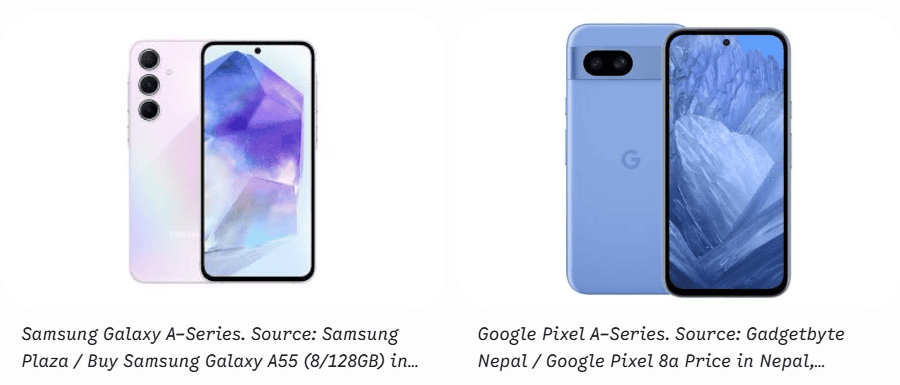
Drivers can choose from brands such as:
Each brand focuses on different strengths such as battery life, camera quality, or performance.
Apple, on the other hand, releases only a few iPhone models each year.
While these models deliver excellent quality, the variety remains limited.
Drivers who want flexibility usually prefer Android.
Software Updates and Security
Security matters when drivers store payment data, earnings information, and personal messages on their phones.
Apple supports iPhones with software updates for many years.
According to Apple’s official support documentation, iPhones often receive updates for five years or more.
Android updates vary by manufacturer. Google Pixel and Samsung flagship phones now provide long update support, but cheaper devices may receive fewer updates.
For drivers who prioritize security and long-term reliability, iPhone still has an advantage.
Which Phone Type Is Best for Ride-Share Drivers?
The answer depends on the driver’s priorities.
Choose Android If You Want
- Lower price options
- Larger batteries
- More device choices
- Deep Google Maps integration
Choose iPhone If You Want
- Smooth app performance
- Long software support
- Strong ecosystem with Apple devices
Both platforms perform well for ride-share driving.
The key lies in choosing the right device within the platform.
Best Smartphones for Ride-Share Drivers in 2026
Here are examples of phones drivers often consider for ride-sharing work.
| Phone | Platform | Why Drivers Like It |
|---|---|---|
| Samsung Galaxy S Series | Android | Strong battery and performance |
| Google Pixel Series | Android | Excellent navigation and software |
| iPhone Pro Models | iOS | Smooth app performance |
| iPhone Standard Models | iOS | Reliable ecosystem |
These devices handle ride-share apps, GPS navigation, and long driving hours effectively.
Final Verdict: Android vs iPhone for Drivers
So, Android vs iPhone for ride-share drivers in 2026 — which wins?
The truth is simple: both platforms work well for ride-share driving.
However, Android often gives drivers more flexibility because it offers better pricing options and larger battery capacities.
Meanwhile, iPhones deliver excellent reliability and smooth app performance, which many drivers appreciate.
If budget and battery matter most, Android usually makes the better choice.
If stability, updates, and ecosystem matter more, iPhone remains a strong option.
In the end, the best smartphone for ride-share drivers in 2026 is the one that handles navigation, ride-share apps, and long driving hours without slowing down.
Choose wisely, mount it on your dashboard, and let the rides begin.
Our Experience Using Android and iPhone for Ride-Share Driving
While researching this guide on Android vs iPhone for ride-share drivers in 2026, we spent time looking at how both platforms behave during real driving situations—navigation running continuously, ride requests popping up, and music playing in the background.
One thing becomes obvious very quickly: ride-share driving is tough on a phone.
During long navigation sessions, Android phones with larger batteries tend to last longer. Drivers who rely heavily on Google Maps often find Android devices slightly more comfortable because the integration feels natural. Everything—from route updates to voice directions—flows smoothly.
However, iPhones show their strength in another area: consistency. Ride-share apps open quickly, switching between navigation and driver apps feels smooth, and the phone rarely stutters. For drivers who value reliability, that stability becomes noticeable during busy driving hours.
There is also a small everyday reality many drivers mention—heat. When the phone sits on a dashboard with navigation active, both platforms can warm up. But modern flagship devices from both ecosystems handle this far better than older models.
In simple terms, both phones can handle ride-share work well. Android often feels more flexible and battery-friendly, while iPhone feels polished and predictable. Drivers usually end up choosing the platform that fits their work style and budget.
Sources
- Google Maps Help Center – Navigation and battery usage
- Apple Developer Documentation – Location services and sensor fusion
- StatCounter Global Mobile OS Market Share Reports
- Official specifications from Apple and major Android manufacturers
Frequently Asked Questions (FAQ)
Is Android or iPhone better for ride-share drivers in 2026?
Both platforms work very well for ride-share drivers. Android phones often provide better battery capacity and lower pricing, which many drivers appreciate during long shifts. iPhones offer smoother app optimization and long software support, which helps with stability. The best choice depends on whether a driver values battery flexibility or consistent performance.
Do ride-share apps work better on iPhone or Android?
Major ride-share platforms such as Uber, Lyft, and delivery apps run smoothly on both systems. However, developers often optimize apps for iPhone first because Apple devices have fewer hardware variations. This can make app performance slightly more consistent on iPhones, while flagship Android phones still deliver excellent results.
Which phone battery lasts longer for ride-share driving?
Many Android phones include larger batteries, often exceeding 5000 mAh. This gives them an advantage during long navigation sessions. iPhones focus more on software efficiency, which also delivers strong battery performance, but Android devices usually provide longer raw battery endurance during heavy GPS usage.
Is GPS navigation better on Android or iPhone?
Both platforms offer accurate navigation. Android devices integrate deeply with Google Maps, which many drivers use daily. iPhones combine GPS with additional sensors for precise positioning. In real-world use, both systems provide reliable directions and traffic updates for ride-share driving.
What features should ride-share drivers look for in a smartphone?
Drivers should prioritize a few key features when choosing a phone:
- Strong battery life
- Reliable GPS navigation
- Fast processor for multitasking
- Bright display for dashboard viewing
- Stable performance with ride-share apps
These features ensure the phone performs well during long driving hours.
Do ride-share drivers need an expensive phone?
Not necessarily. Many mid-range Android phones handle navigation and ride-share apps perfectly well. Expensive flagship phones offer extra power and cameras, but drivers mainly benefit from strong battery life and smooth app performance, which several affordable devices already provide.
Read More
Best Smartphone for Taxi Drivers in 2026
Explore the top picks for taxi drivers who need fast GPS, long battery life, and reliable daily performance.
Read More Related GuideBest Phone for Uber Drivers 2026
Check the best phones for Uber drivers based on navigation, battery backup, smooth app handling, and overall value.
Read More Related GuideBest Smartphones for Drivers in 2026
See the best smartphones for drivers in 2026 with strong GPS accuracy, dependable battery life, and driver-friendly features.
Read More